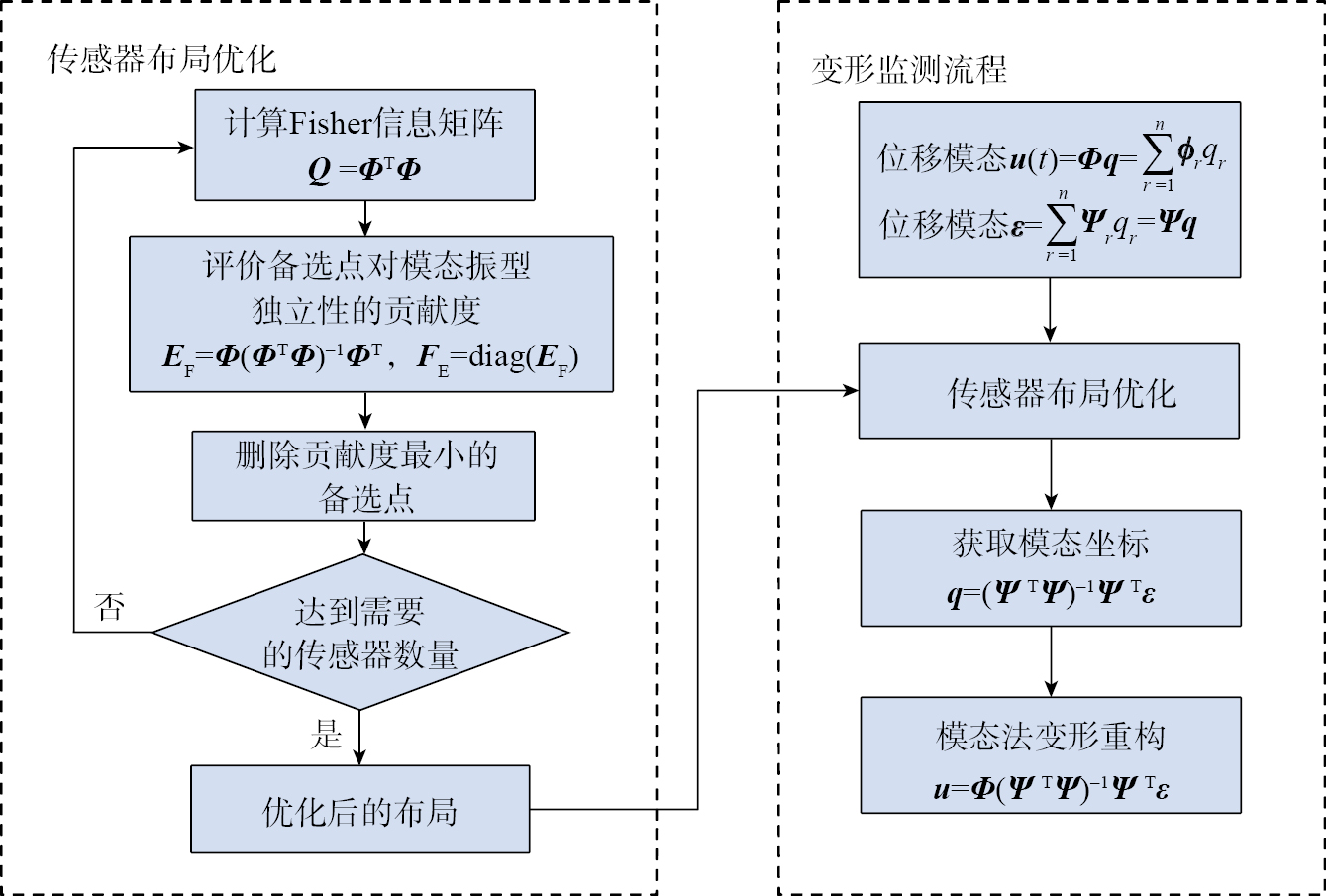
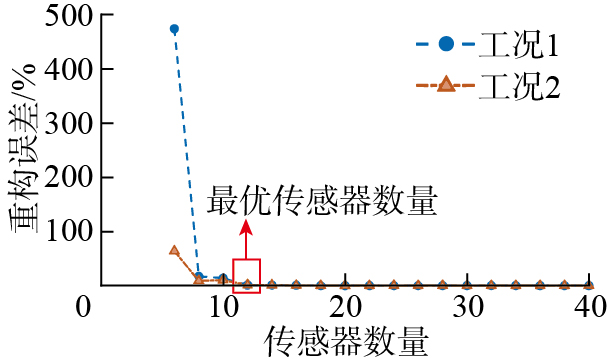
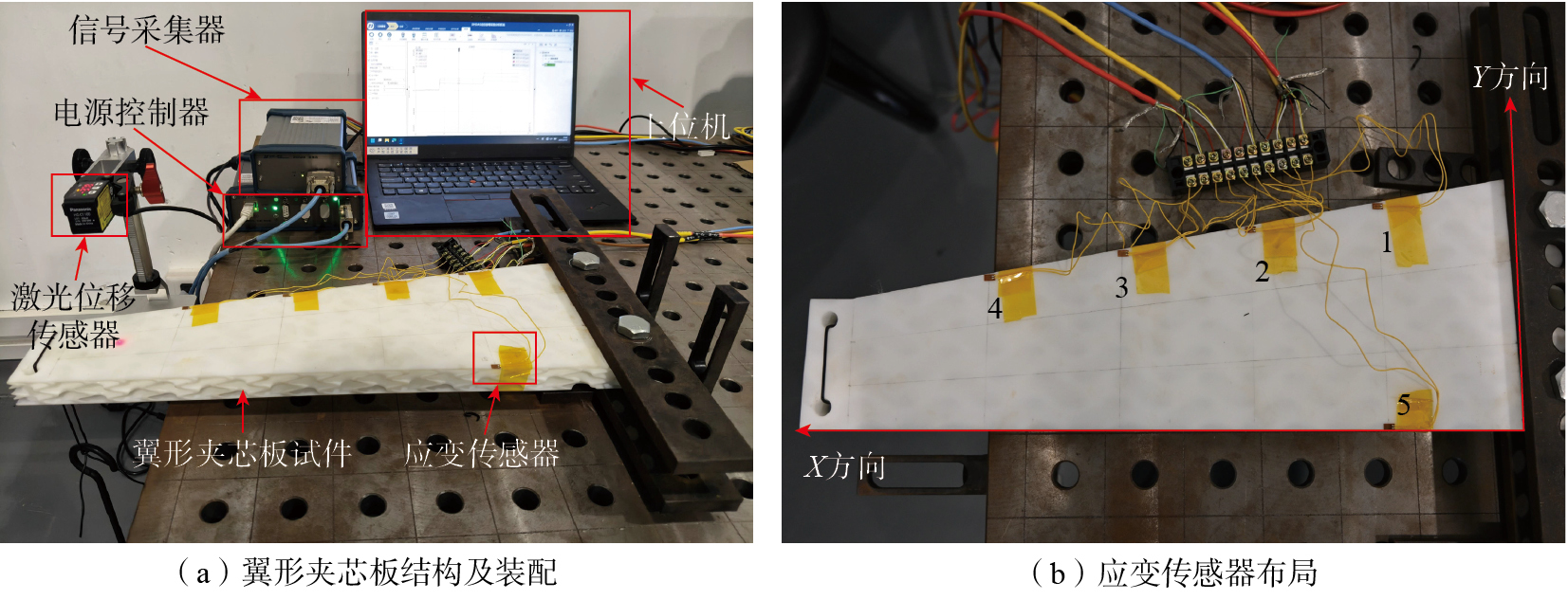
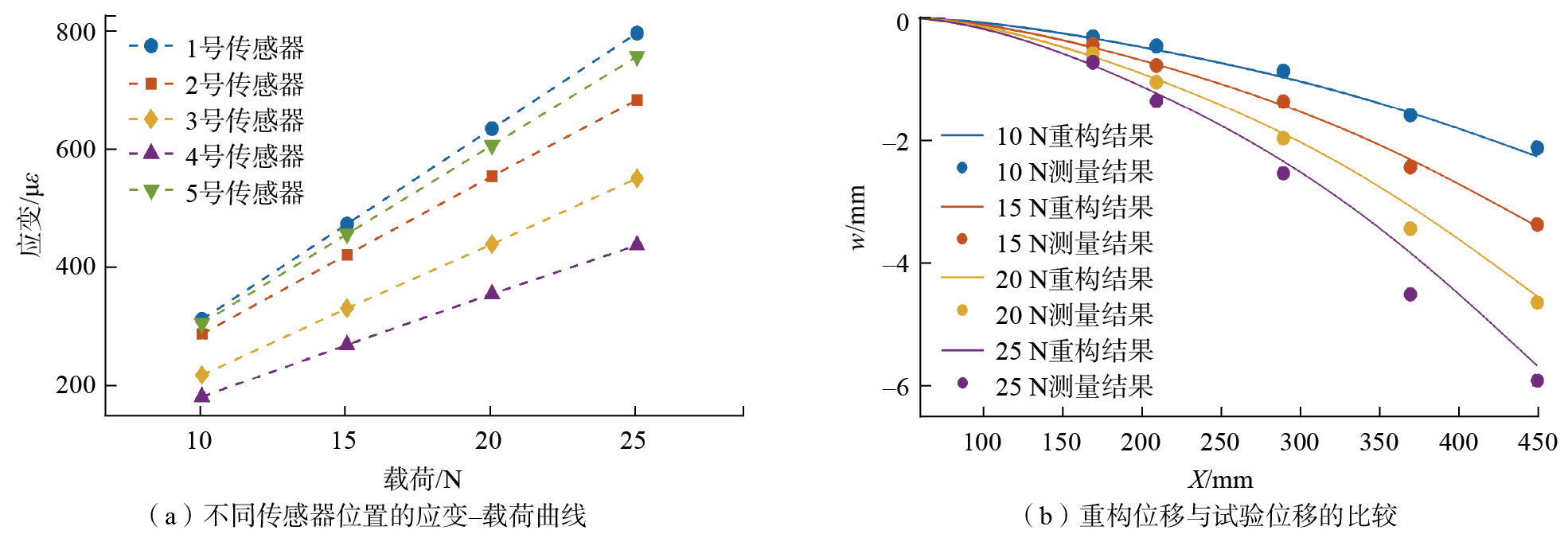
To address the challenge of structural shape sensing in aircraft under constraints of weight and power consumption, a sensor placement optimization method for shape sensing based on the Effective Independence (EFI) is proposed. This method evaluates the information content of all candidate sensor positions using the Fisher Information Matrix and iteratively removes the measurement points that contribute the least to preserving the independence of the target mode shapes. The goal is to retain the maximum modal information with the minimum number of sensors. The effectiveness of the proposed method under complex loads and noise conditions is verified using a numerical simulation model of a wing box segment. Finally, a test platform is built for a lattice sandwich panel with an airfoil shape, and displacement reconstruction error remains below 10% under the optimized strain sensor placement, demonstrating the method’s effectiveness under practical working conditions.
Keywords
Shape sensing; Sensor placement optimization; Fisher Information Matrix; Effective Independence Method; Environment and operational condition;
机翼不仅是飞行器升力来源的主要结构[ 付书山, 孙广开, 何彦霖, 等. 基于逆有限元的机翼蒙皮变形监测方法仿真研究[J]. 航空制造技术, 2022, 65(6): 107–114.FU Shushan, SUN Guangkai, HE Yanlin, et al. Simulation study on wing skin deformation monitoring based on inverse finite element method[J]. Aeronautical Manufacturing Technology, 2022, 65(6): 107–114. 1],还常被作为天线等功能器件的载体,因此,对其进行实时在线变形监测对保障飞行器安全和天线性能具有重要意义[ ZHU L Q, SUN G K, BAO W M, et al. Structural deformation monitoring of flight vehicles based on optical fiber sensing technology: A review and future perspectives[J]. Engineering, 2022, 16: 39–55. 裘进浩, 边义祥, 季宏丽, 等. 智能材料结构在航空领域中的应用[J]. 航空制造技术, 2009, 52(3): 26–29.QIU Jinhao, BIAN Yixiang, JI Hongli, et al. Application of smart materials and structures in aviation industry[J]. Aeronautical Manufacturing Technology, 2009, 52(3): 26–29. 田童, 李建乐, 邓德双, 等. 飞行器结构健康监测技术研究进展[J]. 航空制造技术, 2024, 67(13): 41–67, 98.TIAN Tong, LI Jianle, DENG Deshuang, et al. Research progress of structural health monitoring technology for aircraft[J]. Aeronautical Manufacturing Technology, 2024, 67(13): 41–67, 98. 2-4]。轻量化和低功耗是先进飞行器的关键设计目标,目前常用的变形监测方法有模态法[ FOSS G C, HAUGSE E D. Using modal test results to develop strain to displacement transformations[C]. International Modal Analysis Conference. Nashville: SPIE, 2010. 5]、逆有限元法[ TESSLER A. A variational principle for reconstruction of elastic deformations in shear deformable plates and shells[M]. National Aeronautics and Space Administration, Langley Research Center, 2003. 6]、Ko位移理论[ KO W L, RICHARDS W L, TRAN V T. Displacement theories for in-flight deformed shape predictions of aerospace structures[R]. US: NASA, 2007. 7]、曲率法[ 张合生, 朱晓锦, 李丽, 等. 基于二维曲率数据的空间曲面形态重构算法[J]. 应用基础与工程科学学报, 2015, 23(5): 1035–1046.ZHANG Hesheng, ZHU Xiaojin, LI Li, et al. Space curved surface reconstruction method using two-dimensional curvature data[J]. Journal of Basic Science and Engineering, 2015, 23(5): 1035–1046. 8]和机器学习方法[ BRUNO R, TOOMARIAN N, SALAMA M. Shape estimation from incomplete measurements: A neural-net approach[J]. Smart Materials and Structures, 1994, 3(2): 92–97. 9]。模态法由Foss等[ FOSS G C, HAUGSE E D. Using modal test results to develop strain to displacement transformations[C]. International Modal Analysis Conference. Nashville: SPIE, 2010. 5]提出,通过实测应变数据和应变模态振型得到模态坐标,然后根据模态坐标和位移模态振型计算结构位移,完成结构的变形重构。逆有限元法是一种基于最小二乘变分原理的变形监测方法,通过建立实测应变和理论应变之间的误差函数,并求其极小值以完成变形监测[ TESSLER A. A variational principle for reconstruction of elastic deformations in shear deformable plates and shells[M]. National Aeronautics and Space Administration, Langley Research Center, 2003. 6, TESSLER A, SPANGLER J L. A least-squares variational method for full-field reconstruction of elastic deformations in shear-deformable plates and shells[J]. Computer Methods in Applied Mechanics and Engineering, 2005, 194(2–5): 327–339. 10]。Ko位移理论基于经典材料力学假设,将梁结构离散成多个单元,分别应用欧拉–伯努利梁理论求解梁结构的位移[ KO W L, RICHARDS W L, TRAN V T. Displacement theories for in-flight deformed shape predictions of aerospace structures[R]. US: NASA, 2007. 7]。机器学习方法通过神经网络建立实测应变到全局位移场之间的映射关系,完成基于应变的变形重构[ TESSLER A, SPANGLER J L. A least-squares variational method for full-field reconstruction of elastic deformations in shear-deformable plates and shells[J]. Computer Methods in Applied Mechanics and Engineering, 2005, 194(2–5): 327–339. 10]。其中,模态法具有所需传感器数量少,适用于复杂结构、不依赖于训练数据等优势[ ESPOSITO M, GHERLONE M. Composite wing box deformed-shape reconstruction based on measured strains: Optimization and comparison of existing approaches[J]. Aerospace Science and Technology, 2020, 99: 105758. 11],适用于飞行器机翼结构的实时变形监测。模态法自提出以来得到了广泛的研究。Wang等[ WANG Z C, GENG D, REN W X, et al. Strain modes based dynamic displacement estimation of beam structures with strain sensors[J]. Smart Materials and Structures, 2014, 23(12): 125045. 12]采用模态法对简支梁结构进行动态变形监测。Li等[ LI L, ZHONG B S, LI W Q, et al. Structural shape reconstruction of fiber Bragg grating flexible plate based on strain modes using finite element method[J]. Journal of Intelligent Material Systems and Structures, 2018, 29(4): 463–478. 13]针对悬臂板的受迫振动进行变形监测,采用有限元法进行模态分析并完成传感器布局。为提高变形重构的精度,考虑到有限元获取结构模特振型时存在的建模误差,王林等[ 王林, 周金柱, 王梅, 等. 基于模态扩展技术的天线阵面形变重构[J]. 电子机械工程, 2020, 36(6): 1–7, 41.WANG Lin, ZHOU Jinzhu, WANG Mei, et al. Deformation reconstruction of antenna array based on mode expansion technology[J]. Electro–Mechanical Engineering, 2020, 36(6): 1–7, 41. 14]通过对试验模态进行扩展,获取了应变–位移转换矩阵,采用模态法实现了板结构的变形重构。
在变形监测方法的实际应用中,密集布置传感器虽然能够提高结构变形重构的精度,但会增加重量和功耗,影响飞行器航程、机动性等关键性能[ 汪玉, 邱雷, 黄永安. 面向飞行器结构健康监测智能蒙皮的柔性传感器网络综述[J]. 航空制造技术, 2020, 63(15): 60–69, 80.WANG Yu, QIU Lei, HUANG Yongan. Review of flexible sensor networks for structural health monitoring of aircraft smart skin[J]. Aeronautical Manufacturing Technology, 2020, 63(15): 60–69, 80. 15]。因此,在机上重量和功耗等资源的限制下,对有限数量的传感器进行布置优化,使得在减少传感器数量的同时不影响变形重构的精度具有重要的研究价值[ 张卫方, 何晶靖, 阳劲松, 等. 面向飞行器结构的健康监控技术研究现状[J]. 航空制造技术, 2017, 60(19): 38–47.ZHANG Weifang, HE Jingjing, YANG Jinsong, et al. Research status on structural health monitoring technology for aircraft structures[J]. Aeronautical Manufacturing Technology, 2017, 60(19): 38–47. 杨辰. 结构健康监测的传感器优化布置研究进展与展望[J]. 振动与冲击, 2020, 39(17): 82–93.YANG Chen. Advances and prospects for optimal sensor placement of structural health monitoring[J]. Journal of Vibration and Shock, 2020, 39(17): 82–93. 16-17]。Kammer等[ KAMMER D C. Sensor placement for on-orbit modal identification and correlation of large space structures[C]//1990 American Control Conference. San Diego: IEEE, 1990: 2984–2990. KAMMER D C, TINKER M L. Optimal placement of triaxial accelerometers for modal vibration tests[J]. Mechanical Systems and Signal Processing, 2004, 18(1): 29–41. 18-19]针对国际空间站的在轨模态参数辨识问题提出了有效独立法(Effective independence,EFI),通过最大化测点处的Fisher信息矩阵进行传感器优选。张笑华等[ 张笑华, 任伟新, 方圣恩. 两种传感器的位置优化及结构多种响应重构[J]. 振动与冲击, 2014, 33(18): 26–30.ZHANG Xiaohua, REN Weixin, FANG Sheng’en. Location optimization of dual-type sensors for multi-kind structural response reconstruction[J]. Journal of Vibration and Shock, 2014, 33(18): 26–30. 20]针对二维桁架结构建立了多种传感器布置的优化目标函数,实现了应变传感器和位移传感器的组合最优布置,并在简支梁上进行了验证[ ZHANG X H, XU Y L, ZHU S Y, et al. Dual-type sensor placement for multi-scale response reconstruction[J]. Mechatronics, 2014, 24(4): 376–384. 21]。Chen等[ CHEN W, ZHAO W G, ZHU H P, et al. Optimal sensor placement for structural response estimation[J]. Journal of Central South University, 2014, 21(10): 3993–4001. 22]以最小化重构误差为优化目标,通过倒序删除法实现了面向变形重构的传感器布局优化,并在二维桁架结构上进行了验证。Wang等[ WANG J, LAW S S, YANG Q S. Sensor placement method for dynamic response reconstruction[J]. Journal of Sound and Vibration, 2014, 333(9): 2469–2482. 23]提出了一种两步优化策略降低了变形重构过程中的病态性,并据此给出了传感器的最优布置,采用二维和三维桁架结构进行了算例验证。Li等[ LI L, ZHONG B S, LI W Q, et al. Structural shape reconstruction of fiber Bragg grating flexible plate based on strain modes using finite element method[J]. Journal of Intelligent Material Systems and Structures, 2018, 29(4): 463–478. 13]针对简单悬臂板的变形重构问题,建立了应变–位移转换矩阵,然后通过遗传算法对应变传感器进行了布局优化。蔡智恒等[ 蔡智恒, 周金柱, 唐宝富, 等. 面向结构形变重构的应变传感器优化布局[J]. 振动与冲击, 2019, 38(14): 83–88, 124.CAI Zhiheng, ZHOU Jinzhu, TANG Baofu, et al. Optimal strain sensor placement for structural deformation reconstruction[J]. Journal of Vibration and Shock, 2019, 38(14): 83–88, 124. 24]提出了一种两步序列应变传感器优化布局方法,以最小化重构误差为优化目标,以信息冗余尽可能少为约束条件进行布局优化,并在相控阵天线试验平台上进行验证。Mehrjoo等[ MEHRJOO A, SONG M M, MOAVENI B, et al. Optimal sensor placement for parameter estimation and virtual sensing of strains on an offshore wind turbine considering sensor installation cost[J]. Mechanical Systems and Signal Processing, 2022, 169: 108787. 25]通过最大化期望信息增益,结合传感器布置的经济成本,给出了传感器布局的帕累托解,并采用塔式桁架结构进行算例验证。Nieminen等[ NIEMINEN V, SOPANEN J. Optimal sensor placement of triaxial accelerometers for modal expansion[J]. Mechanical Systems and Signal Processing, 2023, 184: 109581. 26]提出了一种消冗的传感器优化布置方法,实现了细长梁结构的变形监测。Kim等[ KIM S H, CHO C. Effective independence in optimal sensor placement associated with general Fisher information involving full error covariance matrix[J]. Mechanical Systems and Signal Processing, 2024, 212: 111263. 27]基于完整的协方差矩阵对传感器布局进行优化,并在梁结构上进行了验证。Zhou等[ ZHOU Z W, XUE S T, WAN C F, et al. Optimal sensor placement and Bi-type response reconstruction for structural health monitoring using long-gauge FBG strain sensing network[J]. Structures, 2024, 63: 106406. 28]采用了一种基于B样条的大应变插值方法,并根据实测与插值应变实现了变形重构,最后采用悬臂梁结构进行算例验证。
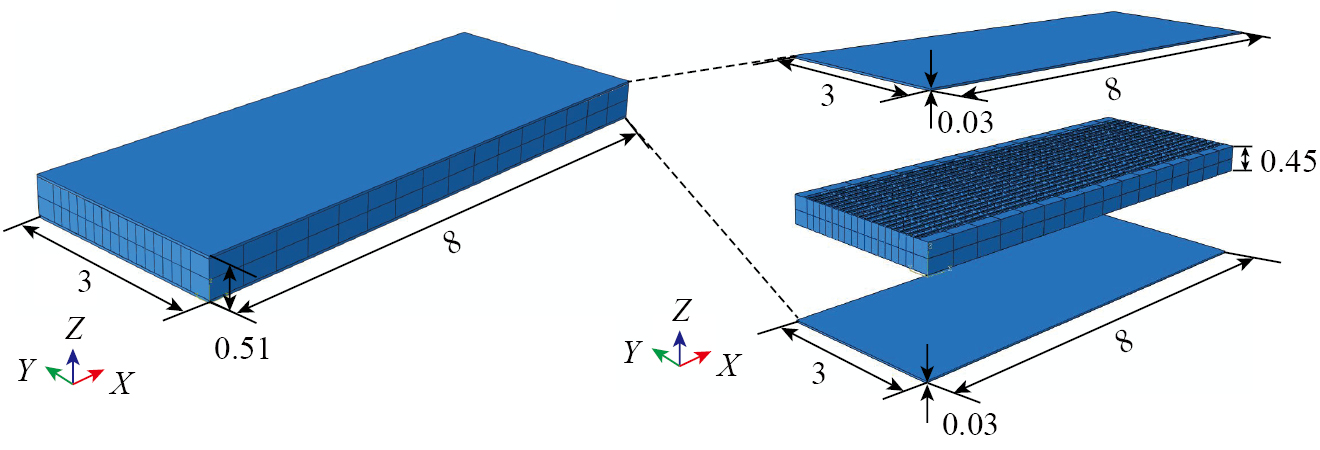
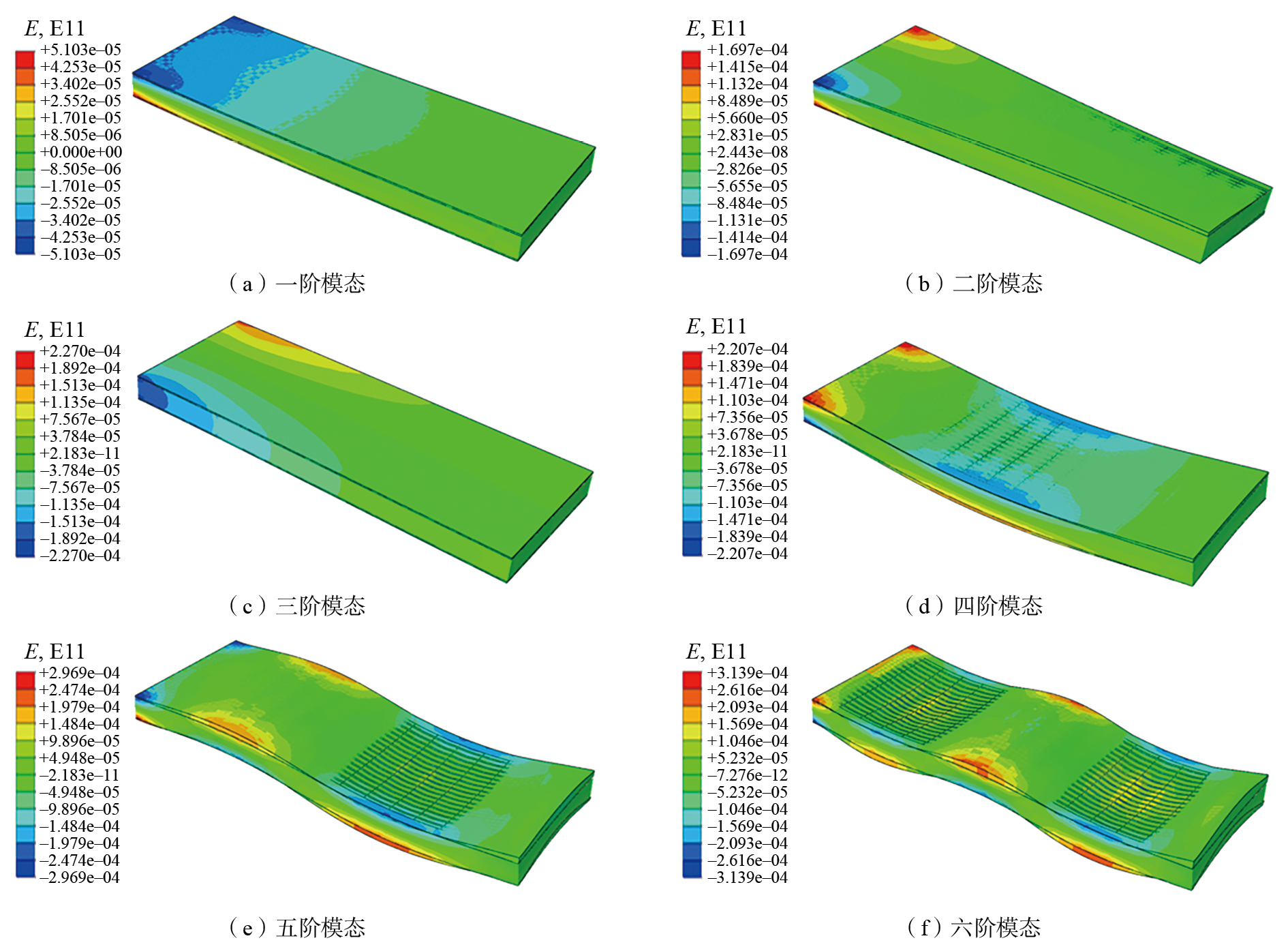
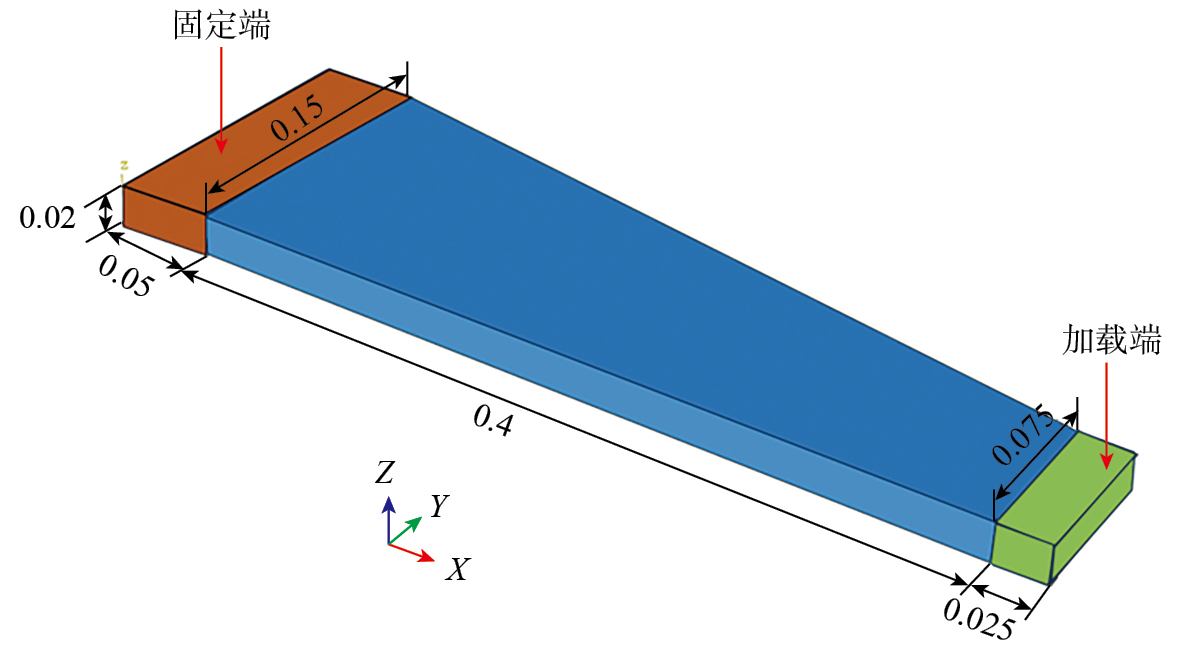
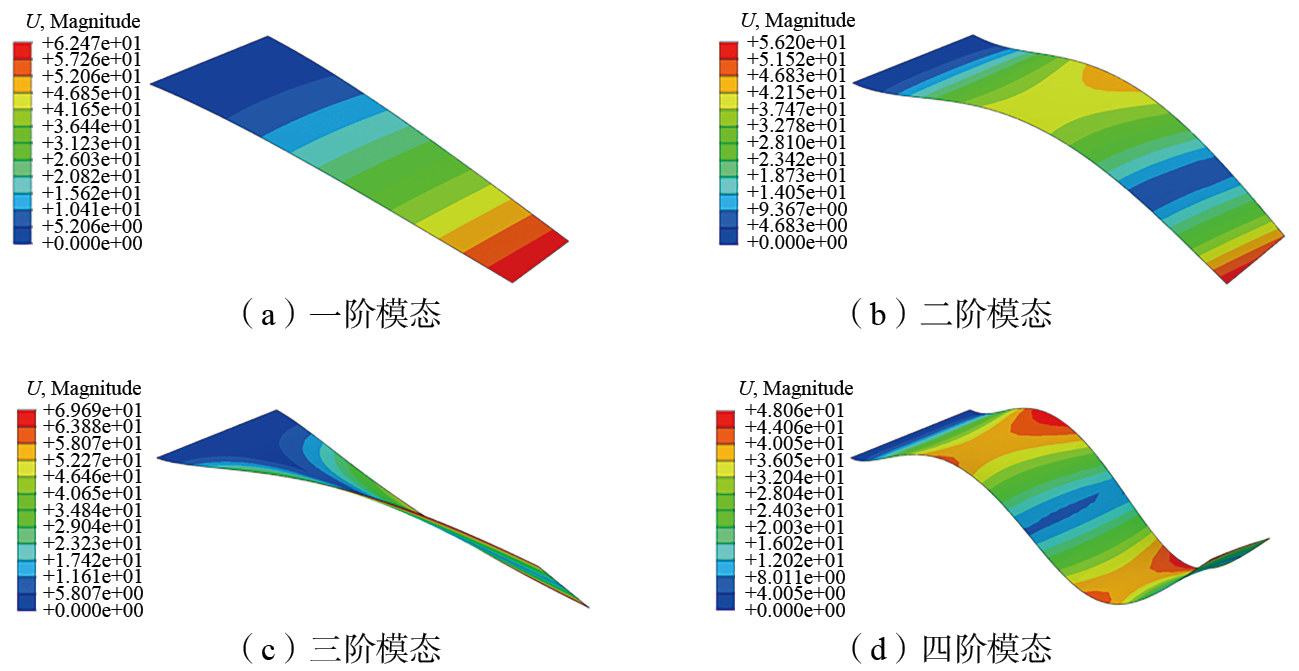
上述面向模态法变形监测的传感器布置优化的应用对象多为悬臂梁、简支梁、桁架等形式简单的结构,且载荷形式简单且单一,变形监测及传感器优化布置方法在复杂服役环境和复杂结构上的应用验证有待进一步研究。本文研究了基于有效独立法的形状感知传感器布局优化方法,首先基于模态叠加原理和Fisher信息矩阵构建了面向形状感知的传感器布局优化方法,在保证重构精度的基础上采用少量传感器尽可能多的获取结构变形信息;然后通过构建服役环境下的机翼盒段数值仿真模型[ HICKS R M, CLIFF S E. An evaluation of three two-dimensional computational fluid dynamics codes including low Reynolds numbers and transonic Mach numbers[R]. Silicon Valley: Ames Research Center, 1991. 29],并引入测量噪声,验证了所提方法在复杂载荷和噪声下的有效性;最后采用三周期极小曲面(Triply periodic minimal surface,TPMS)点阵夹芯翼型板结构搭建试验平台,在多种载荷作用下进一步验证了所提传感器布局优化方法面向复杂结构时的实用性和准确性。本研究对于提升复杂结构在服役状态下的变形监测精度、实现传感器资源的高效利用、保障飞行器结构安全与功能器件性能具有重要意义。
Fisher信息矩阵用于描述概率密度在其参数下的信息总量,反映了概率分布对参数变化的敏感度。对于一个参数化的概率分布p(x|θ),其中θ=(θ1,θ2,…θk)是k维参数向量,Fisher信息矩阵为基于对数似然函数的二阶导数[ KIM S H, CHO C. Effective independence in optimal sensor placement associated with general Fisher information involving full error covariance matrix[J]. Mechanical Systems and Signal Processing, 2024, 212: 111263. 27]。
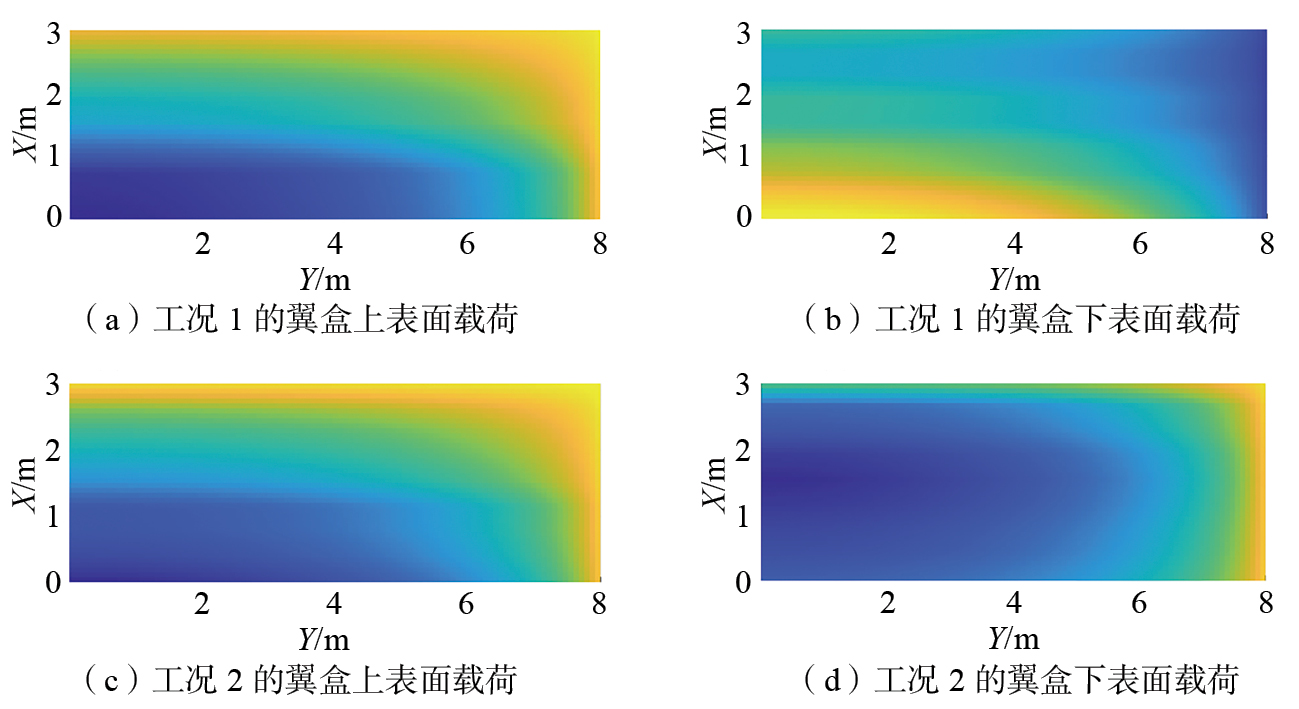
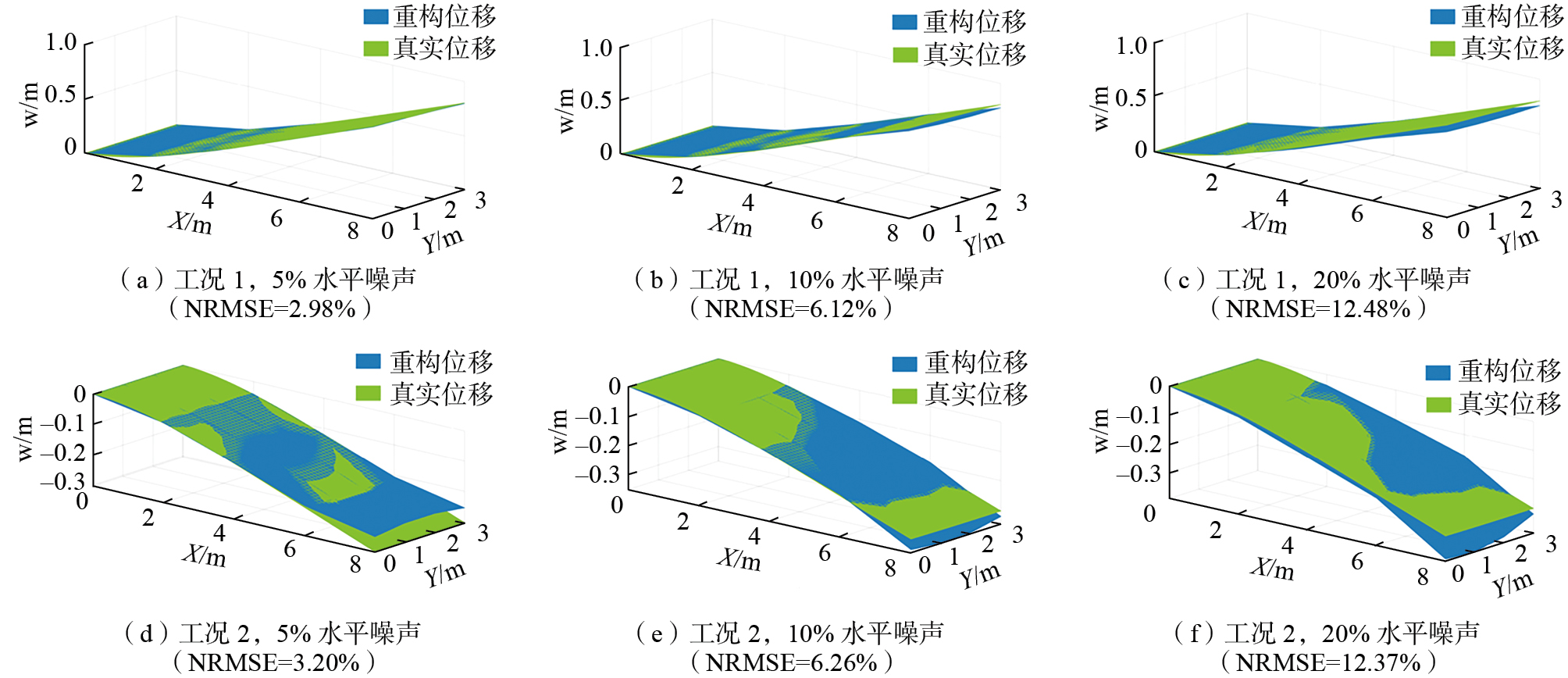
根据NASA报告中气动载荷特性研究的试验数据[ ZHOU Z W, XUE S T, WAN C F, et al. Optimal sensor placement and Bi-type response reconstruction for structural health monitoring using long-gauge FBG strain sensing network[J]. Structures, 2024, 63: 106406. 28],选取两种典型工况,整个翼盒上下表面的气动载荷分布情况如图6所示。
付书山, 孙广开, 何彦霖, 等. 基于逆有限元的机翼蒙皮变形监测方法仿真研究[J]. 航空制造技术, 2022, 65(6): 107–114. FUShushan, SUNGuangkai, HEYanlin, et al. Simulation study on wing skin deformation monitoring based on inverse finite element method[J]. Aeronautical Manufacturing Technology, 2022, 65(6): 107–114.
[2]
ZHUL Q, SUNG K, BAOW M, et al. Structural deformation monitoring of flight vehicles based on optical fiber sensing technology: A review and future perspectives[J]. Engineering, 2022, 16: 39–55.
[3]
裘进浩, 边义祥, 季宏丽, 等. 智能材料结构在航空领域中的应用[J]. 航空制造技术, 2009, 52(3): 26–29. QIUJinhao, BIANYixiang, JIHongli, et al. Application of smart materials and structures in aviation industry[J]. Aeronautical Manufacturing Technology, 2009, 52(3): 26–29.
[4]
田童, 李建乐, 邓德双, 等. 飞行器结构健康监测技术研究进展[J]. 航空制造技术, 2024, 67(13): 41–67, 98. TIANTong, LIJianle, DENGDeshuang, et al. Research progress of structural health monitoring technology for aircraft[J]. Aeronautical Manufacturing Technology, 2024, 67(13): 41–67, 98.
[5]
FOSSG C, HAUGSEE D. Using modal test results to develop strain to displacement transformations[C]. International Modal Analysis Conference. Nashville: SPIE, 2010.
[6]
TESSLERA. A variational principle for reconstruction of elastic deformations in shear deformable plates and shells[M]. National Aeronautics and Space Administration, Langley Research Center, 2003.
[7]
KOW L, RICHARDSW L, TRANV T. Displacement theories for in-flight deformed shape predictions of aerospace structures[R]. US: NASA, 2007.
[8]
张合生, 朱晓锦, 李丽, 等. 基于二维曲率数据的空间曲面形态重构算法[J]. 应用基础与工程科学学报, 2015, 23(5): 1035–1046. ZHANGHesheng, ZHUXiaojin, LILi, et al. Space curved surface reconstruction method using two-dimensional curvature data[J]. Journal of Basic Science and Engineering, 2015, 23(5): 1035–1046.
[9]
BRUNOR, TOOMARIANN, SALAMAM. Shape estimation from incomplete measurements: A neural-net approach[J]. Smart Materials and Structures, 1994, 3(2): 92–97.
[10]
TESSLERA, SPANGLERJ L. A least-squares variational method for full-field reconstruction of elastic deformations in shear-deformable plates and shells[J]. Computer Methods in Applied Mechanics and Engineering, 2005, 194(2–5): 327–339.
[11]
ESPOSITOM, GHERLONEM. Composite wing box deformed-shape reconstruction based on measured strains: Optimization and comparison of existing approaches[J]. Aerospace Science and Technology, 2020, 99: 105758.
[12]
WANGZ C, GENGD, RENW X, et al. Strain modes based dynamic displacement estimation of beam structures with strain sensors[J]. Smart Materials and Structures, 2014, 23(12): 125045.
[13]
LIL, ZHONGB S, LIW Q, et al. Structural shape reconstruction of fiber Bragg grating flexible plate based on strain modes using finite element method[J]. Journal of Intelligent Material Systems and Structures, 2018, 29(4): 463–478.
[14]
王林, 周金柱, 王梅, 等. 基于模态扩展技术的天线阵面形变重构[J]. 电子机械工程, 2020, 36(6): 1–7, 41. WANGLin, ZHOUJinzhu, WANGMei, et al. Deformation reconstruction of antenna array based on mode expansion technology[J]. Electro–Mechanical Engineering, 2020, 36(6): 1–7, 41.
[15]
汪玉, 邱雷, 黄永安. 面向飞行器结构健康监测智能蒙皮的柔性传感器网络综述[J]. 航空制造技术, 2020, 63(15): 60–69, 80. WANGYu, QIULei, HUANGYongan. Review of flexible sensor networks for structural health monitoring of aircraft smart skin[J]. Aeronautical Manufacturing Technology, 2020, 63(15): 60–69, 80.
[16]
张卫方, 何晶靖, 阳劲松, 等. 面向飞行器结构的健康监控技术研究现状[J]. 航空制造技术, 2017, 60(19): 38–47. ZHANGWeifang, HEJingjing, YANGJinsong, et al. Research status on structural health monitoring technology for aircraft structures[J]. Aeronautical Manufacturing Technology, 2017, 60(19): 38–47.
[17]
杨辰. 结构健康监测的传感器优化布置研究进展与展望[J]. 振动与冲击, 2020, 39(17): 82–93. YANGChen. Advances and prospects for optimal sensor placement of structural health monitoring[J]. Journal of Vibration and Shock, 2020, 39(17): 82–93.
[18]
KAMMERD C. Sensor placement for on-orbit modal identification and correlation of large space structures[C]//1990 American Control Conference. San Diego: IEEE, 1990: 2984–2990.
[19]
KAMMERD C, TINKERM L. Optimal placement of triaxial accelerometers for modal vibration tests[J]. Mechanical Systems and Signal Processing, 2004, 18(1): 29–41.
[20]
张笑华, 任伟新, 方圣恩. 两种传感器的位置优化及结构多种响应重构[J]. 振动与冲击, 2014, 33(18): 26–30. ZHANGXiaohua, RENWeixin, FANGSheng’en. Location optimization of dual-type sensors for multi-kind structural response reconstruction[J]. Journal of Vibration and Shock, 2014, 33(18): 26–30.
[21]
ZHANGX H, XUY L, ZHUS Y, et al. Dual-type sensor placement for multi-scale response reconstruction[J]. Mechatronics, 2014, 24(4): 376–384.
[22]
CHENW, ZHAOW G, ZHUH P, et al. Optimal sensor placement for structural response estimation[J]. Journal of Central South University, 2014, 21(10): 3993–4001.
[23]
WANGJ, LAWS S, YANGQ S. Sensor placement method for dynamic response reconstruction[J]. Journal of Sound and Vibration, 2014, 333(9): 2469–2482.
[24]
蔡智恒, 周金柱, 唐宝富, 等. 面向结构形变重构的应变传感器优化布局[J]. 振动与冲击, 2019, 38(14): 83–88, 124. CAIZhiheng, ZHOUJinzhu, TANGBaofu, et al. Optimal strain sensor placement for structural deformation reconstruction[J]. Journal of Vibration and Shock, 2019, 38(14): 83–88, 124.
[25]
MEHRJOOA, SONGM M, MOAVENIB, et al. Optimal sensor placement for parameter estimation and virtual sensing of strains on an offshore wind turbine considering sensor installation cost[J]. Mechanical Systems and Signal Processing, 2022, 169: 108787.
[26]
NIEMINENV, SOPANENJ. Optimal sensor placement of triaxial accelerometers for modal expansion[J]. Mechanical Systems and Signal Processing, 2023, 184: 109581.
[27]
KIMS H, CHOC. Effective independence in optimal sensor placement associated with general Fisher information involving full error covariance matrix[J]. Mechanical Systems and Signal Processing, 2024, 212: 111263.
[28]
ZHOUZ W, XUES T, WANC F, et al. Optimal sensor placement and Bi-type response reconstruction for structural health monitoring using long-gauge FBG strain sensing network[J]. Structures, 2024, 63: 106406.
[29]
HICKSR M, CLIFFS E. An evaluation of three two-dimensional computational fluid dynamics codes including low Reynolds numbers and transonic Mach numbers[R]. Silicon Valley: Ames Research Center, 1991.
[30]
HUANGT X, YUANS F, CHENJ, et al. Thermal deformation monitoring of large-scale composite honeycomb spaceborne antennas with lim ited strain measurements[J]. Aerospace Science and Technology, 2024, 155: 109665.